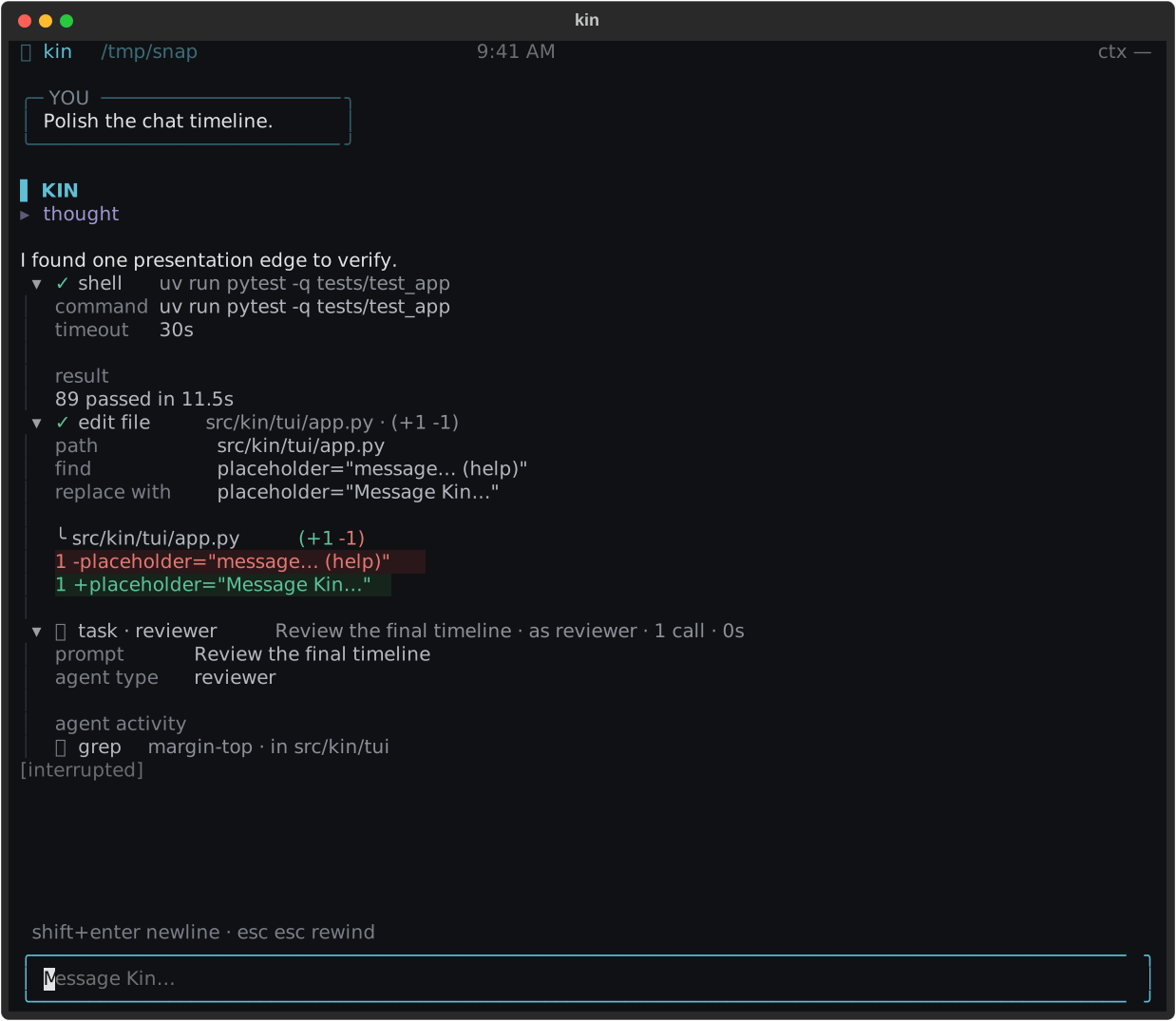
kin — a native Python agent harness with a
terminal UI. Your agent, your keys, your machine. One command installs the
kin CLI:
$ bash <(curl -fsSL https://get.kinra.ai/install.sh)

Prereq: sudo dnf install git — then paste the one-liner above.
Prereq: sudo apt install git — then paste the one-liner above.
Prereq: xcode-select --install (for git) — then paste the one-liner above. Prefer Homebrew? brew install uv works too; the installer uses it if present.
kin runs in WSL2 on Windows today (native Windows is a tracked follow-up):
> wsl --install
Reboot / reopen, then run the Linux one-liner above inside the WSL shell.
What this does
- Installs uv if it's missing (no sudo, lands in
~/.local/bin). - Clones
kinra-ai/kin-textualto~/kin-textualand installs thekincommand. - Writes a starter
~/.kin/settings.toml— keys stay yours, entered in-app via/providers.
Prereqs
- Linux or macOS (Windows: WSL2, above).
- An SSH key with access to the
kinra-ai/kin-textualrepo. - git.
No SSH key? Quick path
Installs the latest built wheel — read-only build, no checkout, no dev loop:
$ uv tool install kin --index https://get.kinra.ai/simple/
Verify it worked
$ kin doctor
Checks the tools, the config, and that your model endpoint answers. (kin --version works too.)
Deploy the Outpost (server)
$ bash <(curl -fsSL https://get.kinra.ai/outpost-install.sh)
- Checks docker + compose, clones the repo, stages the five secret files.
- With secrets filled: builds and boots the container, waits for the healthcheck.
- Honesty line: it stages secrets and prints the checklist — OIDC values and reverse-proxy/DNS routing stay manual, by design.
Read it before you run it
install.sh · sha256 | outpost-install.sh · sha256 | kin-latest.whl sha256
The shas are served from the same origin as the scripts — they verify a download completed intact, not that the origin is honest. The scripts are short; reading them is the real check.